Methods in Movement: Dance for Health Scotland Research Network
Page Navigation
About the Project
Methods in Movement (MiM): Dance for Health (DfH) Scotland Research Network, funded by a Royal Society of Edinburgh (RSE) Research Collaboration Grant, had two key aims: to explore dance-centred methods, and to develop a national network.
Reflecting the interdisciplinary premise of the DfH field, the project team was comprised of dance scholars, Drs Bethany Whiteside and Emily Davis (Royal Conservatoire of Scotland), Prof. Sara Houston (University of Roehampton), and Prof. Morven Shearer who has a background in medical ethics and healthcare policy (University of St Andrews). Through our project partners, Dance Base and Scottish Ballet (key contacts, Emma Smith and Tiffany Stott respectively), we collaborated with dancers living with Parkinson’s and multiple sclerosis, DfH practitioners and musicians. Further details about the Project Team can be accessed below.
Throughout the project, we undertook a range of activities to support our two key aims. These included scoping exercises (a literature review and exercise mapping DfH activity in Scotland), a survey for organisations and individuals engaging in DfH activity, online consultation with a range of stakeholders, and in-person workshops with our project partners.
Further detail about each of these activities can be accessed via the Project Activities section below.
If you have any queries about the project, or are interested in finding out more, please contact Bethany Whiteside for further information. We would be delighted to hear from you.
Project Team


Dance Base
Dance Base is Scotland’s National Centre for Dance ‘on a mission to help dance flourish and change lives in Scotland and beyond.’ Based in the Grassmarket, Edinburgh, the organisation reaches, supports, and inspires professional and community dancers and dance artists through its weekly classes and programmes, performances, international exchanges, and national projects. The MiM DfH project collaborated with dancers, practitioners and musicians involved in their Dance for Parkinson’s programme. Emma Smith is Head of Health, Wellbeing and Engagement.

Scottish Ballet
Scottish Ballet is Scotland’s National Dance Company with values rooted in ‘Excellence’, ‘Inclusion’ and ‘Innovation’ and a vision to ‘share the power of dance to as many people as possible.’ SB: Health, a National Centre for Dance Health, runs programmes with and for people living with neurological conditions, Long Covid, and reduced mobility, and programmes specifically for young people. The MiM DfH project collaborated with dancers, practitioners and musicians involved in their SB Elevate® (dance for multiple sclerosis) programme. Tiffany Stott is Dance Health Manager.
Project Activities
Scoping review: use of dance-centred methodology and methods
During the summer and autumn of 2024, a scoping review was undertaken across relevant databases including Arts and Humanities Citation Index, Scopus, APA Psyc, and ProQuest Theses & Dissertations. We were keen to understand how and which dance-centred methods had been employed across different domains.
Circa 80 largely interdisciplinary relevant works were uncovered (with around 30 studies being of particular relevance) situated, broadly speaking, within Dance (Choreography, Dance Studies, Dance for Health, Dance Therapy etc.), but also within Business, Cognitive Science, Contemporary Art, Disability Studies, Education, Health Humanities, Leadership Development, Machine Learning, and Therapy Studies.
Examples of dance-centred methods range from the Choreo-Story method (Smith, 2020), to Kealiinohomoku’s Silhougraphs® (Hamera, 2021), and Motley’s (2024) concept of ‘leakiness.’ Methodologies centre an artistic and embodied approach.
Mapping exercise: DfH activity in Scotland
Parallel with the scoping review, a desk-based exercise was undertaken to ascertain the range and extent of DfH activity in Scotland that is publicly advertised. Understanding the potential for arguably all dance to have a health and wellbeing focus (making for an unwieldy and less useful mapping exercise!), we focused on those dance activities that were designed for a particular population or individuals with a particular lived condition.
Circa 25 programmes or activities were uncovered taking place across 30 locations in Scotland, from Orkney to Peebles and Greenock to Dundee (highlighting the variety of activities). We recognise there is likely a much higher volume of ‘relevant’ DfH activities taking place, even within the narrower parameters that we adopted.
Mapping exercise: survey of the DfH landscape in Scotland
A detailed survey was launched in the autumn of 2024 inviting DfH practitioners and musicians (freelance and salaried), dance movement psychotherapists (freelance and salaried), and relevant organisational administrative staff to share their thoughts on:
- Dance for Health (DfH) activity taking place in Scotland.
- How such activity is evaluated.
- Interest in establishing a Scotland-based DfH network and what this could or should look like.
We offered a definition of DfH and asked people to consider if they felt their practice aligned with this definition. We received 20 responses from five out of the six regions of Scotland (reflecting perhaps a finite but geographically spread community) with respondents split almost equally between organisational staff and freelance DfH practitioners and musicians.
Activity and practice
The majority of respondents selected publicly funded dance organisations as the site of the DfH activity engaged in, with activity most likely to be funded by trusts and foundations.
The majority of respondents had worked in DfH for five or more years with a wide range of populations. The majority of activity took the form of group classes (11-20 people) but 1-1 classes, workshops, performances, rehearsals, and guest classes were all represented. Over two thirds of activity was in-person with activity also hybrid, pre-recorded, and wholly online. Over two thirds of DfH activity took place with live music (‘always’ or ‘sometimes’). Respondents ranked ‘social’, ‘therapeutic’, and ‘artistic’ as the most important domains characterising DfH. A variety of teaching styles – reproductive, exploratory, reflective, collaborative – are drawn upon.
Evaluation
Two thirds of respondents had been involved with DfH evaluation activity in some way, with over half having undertaken or supported evaluation internally. The top three reasons cited for undertaking evaluation were to understand impact; improve activity; and provide accountability; with a wide variety of methods drawn upon. Respondents cited increased staff expertise; staff capacity; accessing appropriate toolkits; and appropriate training, as factors that would most support further evaluation activity internally.
Almost three quarters of respondents thought a national DfH network would be useful with remaining respondents thinking a network may be useful. Respondents selected ‘Creating a repository of DfH evaluation and research guidance and toolkits’; ‘Develop methods specific to dance; and ‘Partnership opportunities’ as priorities for a network. We were very interested to see ‘dance methods’ foregrounded given one of the key aims of the MiM project.
Online consultation with the DfH community in Scotland
Autumn 2024 also saw an online consultation take place with 12 DfH practitioners, organisational staff and academic researchers. The session unfolded in three parts: ‘Dance for Health (DfH) – Term and Remit’; ‘Development of Methods in DfH’; ‘Development of a DfH Scotland Network’ – and involved a presentation and discussion.
We were interested to know which terms or terminology people used; how they defined their practice and work; and people’s perceptions of dance-centred methods. Findings from the scoping review and examples of dance-based methods acted as catalysts for discussion.
Developing a dance-centred method: co-creating choreographic scores
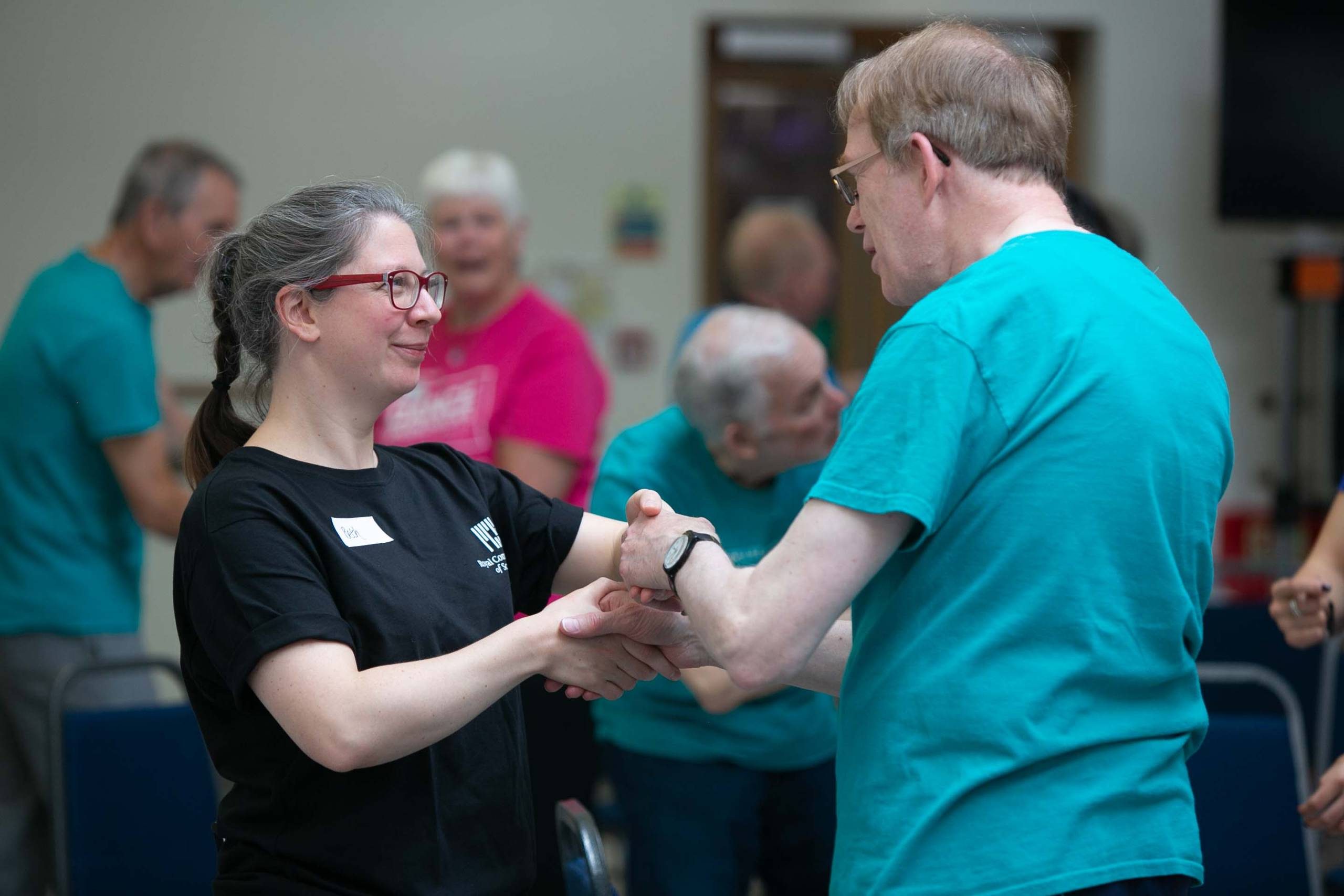
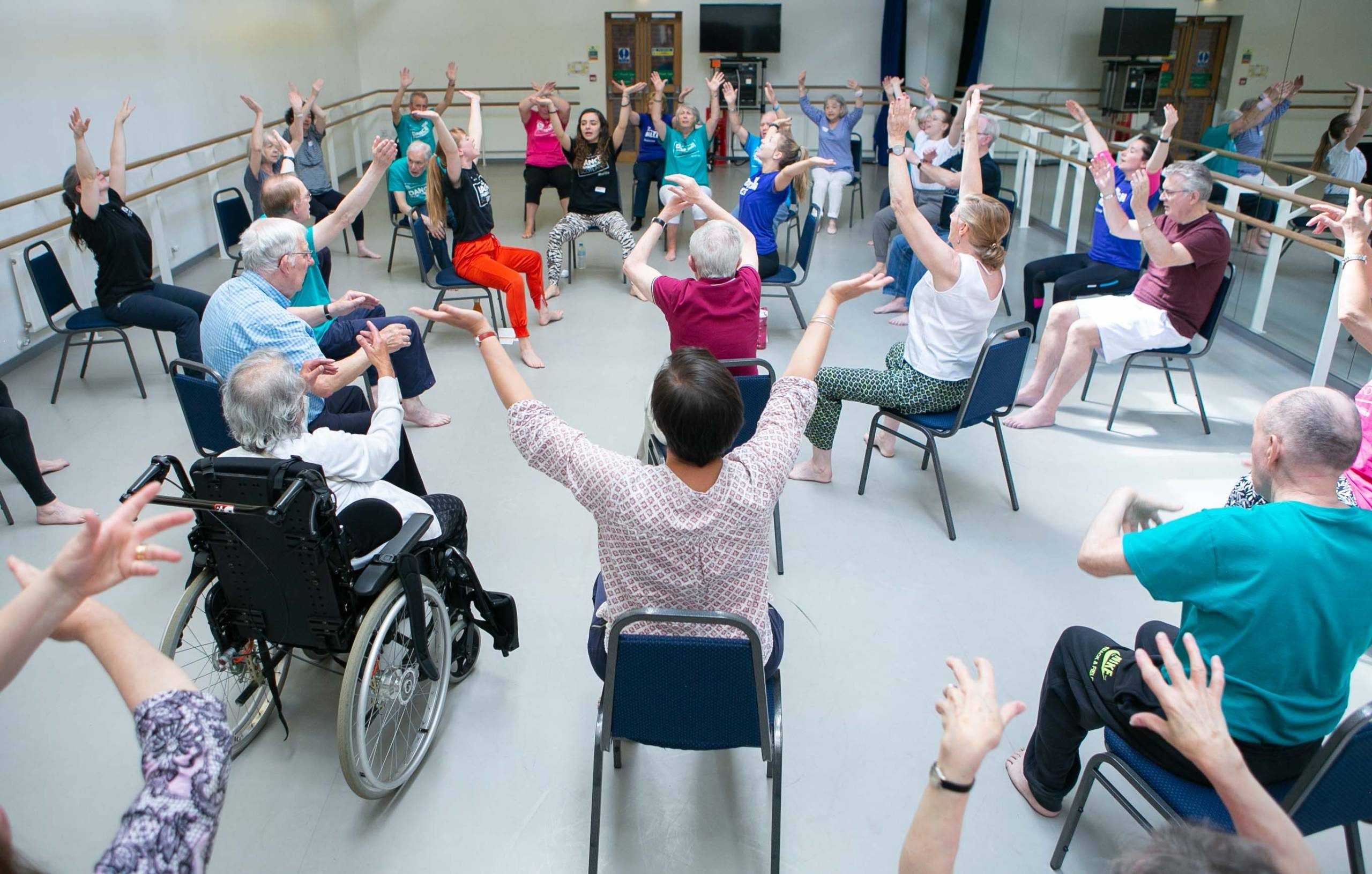
During spring 2025, two series of workshops (each the equivalent of three half days) took place with dancers living with Parkinson’s and multiple sclerosis, DfH practitioners, musicians, organisational staff, and academic researchers, through partners Dance Base and Scottish Ballet, to develop dance-centred methods.
Together, we co-created, and improvised to, choreographic scores. Each group set the research question or topic to be explored through text and movement. Workshops were shaped by an equitable approach with availability, capacity, timing, energy levels (lunch!), and reimbursement or renumeration all necessary considerations.
Dancers were reimbursed at the recommended National Institute for Health Research (NIHR) rate and freelance practitioners were renumerated in line with the sector rate. Debriefs focused on talking through the experience; our individual and collective learning, confidence, enjoyment, changing relationships and shared responsibility.
Dissemination activity
Since summer 2025, details and learning from the project – focused on the development of dance-centred methods and a national DfH network – have been shared via presentations at the launch of the PATHS Research Group (University of Edinburgh, 4 July 2025 ), Parkinson’s UK Excellence Network in Scotland (regional event, 27 August 2025), Centre for Medical Humanities 2nd Annual Symposium, University of St Andrews, 23 January 2026), The Healing Power of Dance, University of St Andrews, 30 January 2026), and to the Dance Health Student Society (University of Dundee,18 March 2026). We have connected with other key networks in Scotland, including Healing Arts Scotland (HAS), Arts Culture Health & Wellbeing Scotland (ACHWS), and Dance Research Scotland (DaReS).
We have also published an article on the project in a special issue of Animated (theme: Dance Health and Wellbeing, autumn 2025), People Dancing’s membership magazine.
Next Steps
Options for further funding to advance a DfH Scotland Research Network network are being explored. In the meantime, we will keep the above section updated with details of relevant publications and presentations.
Moving forward, we are also particularly keen to explore analysis of dance-centred methods and how these approaches can best be shared with dancers and practitioners, who have a specific embodied knowledge and skillset, in support of internal and external evaluation and research activity.